Since January 2025, we are part of the medical faculty of Ruhr University Bochum. Our team combines expertise in molecular virology, bioinformatics method development, and virus-host interactions. Using high-throughput virus genome sequencing, single-cell, and spatial transcriptomics, we investigate infection pathways and viral evolution, particularly of RNA viruses such as Hepatitis E. By combining fundamental knowledge, clinical data, and analytical precision, we develop customized analysis tools for virological research. Our goal is to identify functional key points of molecular interactions that contribute to disease development and enable therapeutic approaches.
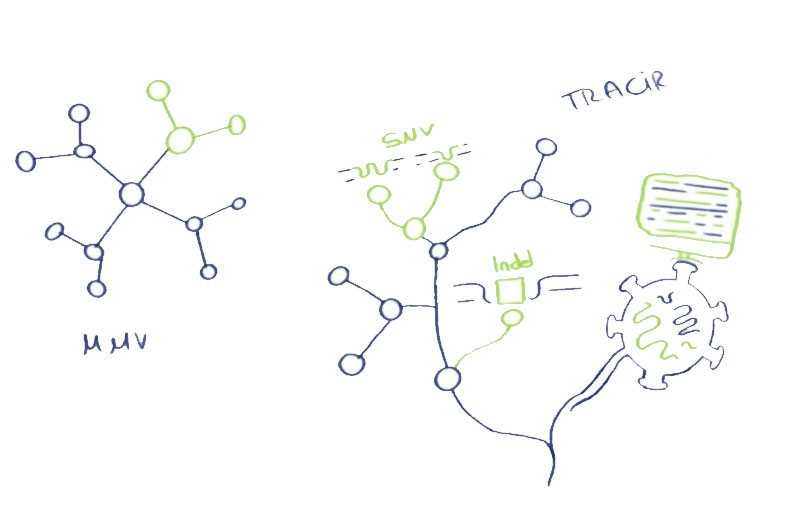
Viral evolution is a central research focus of our team. RNA viruses such as hepatitis E virus or enteroviruses exhibit remarkable genetic variability. This diversity arises from error-prone replication, recombination, and host-driven selection.
We investigate how viruses evolve within individual hosts and across broader timescales—such as during zoonotic transmission or the emergence of antiviral resistance. Using high-throughput sequencing and computational tools, we analyze viral diversity, reconstruct phylogenetic relationships, and identify selective pressures.
Our goal is to uncover evolutionary patterns that contribute to viral pathogenesis and therapeutic failure.

Viruses profoundly reshape the cellular biology of their hosts. Our group explores how infections alter immune signaling, interfere with defense pathways, and trigger inflammatory responses.
We study how acute and chronic infections shift the balance between immune activation and suppression—and how this impacts disease progression and viral persistence. A particular focus lies on regulatory networks that either promote or restrict antiviral functions.
Our goal is to pinpoint functional control hubs within the virus–host interface that may serve as targets for novel therapeutic strategies.
Integrative Infection Omics

Infections affect biological systems on multiple levels—from gene expression in individual cells to complex changes across entire tissues. Our aim is to capture these dynamics in a comprehensive way.
We integrate bulk, single-cell, and spatial transcriptomics with proteomic approaches and advanced analytical methods. This multilayered strategy allows us to reconstruct infection trajectories in space and time, decode cell type-specific responses, and uncover systemic patterns of viral pathogenesis.
Our research provides high-resolution insights into all layers of infection—from molecular signaling to cellular networks and tissue architecture. The result: novel hypotheses on virus–host interactions and rich data resources for targeted intervention strategies.

Group Leader: Dr. Richard JP Brown
Viruses are obligate intracellular parasites, hijacking and reprogramming host cells to enable the propagation and dissemination of their progeny: the viral life cycle therefore represents a complex and multistage interplay of virally encoded proteins interacting with host proteins. Host dependency factors facilitate viral spread and are essential at every step of the virus lifecycle including attachment, entry, uncoating, genome translation, replication, assembly and release. In parallel, the cellular antiviral response to infection, which can actively suppress viral propagation by multiple diverse mechanisms, is mediated by host restriction factors. Host restriction factors can be constitutively expressed or induced upon infection as part of the interferon system. Viral species and tissue tropism are therefore governed by a finely tuned balance between host dependency and restriction factors.
In the Virus Tropism research group, we focus on viruses that cause severe disease in humans. Utilizing -omics approaches coupled with in vitro experimental systems, we identify and characterize host determinants of viral species and tissue tropism. Furthermore, we investigate host transcriptional responses to an array of viral infections, to dissect and compare global cellular antiviral programs in different tissues/species. Our research aims to improve understanding of the viral life cycle, shed light on pathogenesis mechanisms and the determinants of tissue/species tropism, and to ultimately identify potential druggable therapeutic targets in the host.
Selected Publications:
Qu B, Miskey C, Gömer A, Kleinert RDV, Calvo-Ibanez S, Eberle R, Ebenig A, Postmus D, Nocke MK, Herrmann M, Itotia TK, Herrmann ST, Heinen N, Höck S, Hastert FD, von Rhein C, Schürmann C, Li X, van Zandbergen G, Widera M, Ciesek S, Schnierle BS, Tarr AW, Steinmann E, Goffinet C, Pfaender S, Krijnse-Locker J, Mühlebach MD, Todt D, Brown RJP (2024)
‘TMPRSS2-mediated SARS-CoV-2 uptake boosts innate immune activation, enhances cytopathology, and drives convergent virus evolution’
PNAS. 121 (23): e2407437121
https://www.pnas.org/doi/full/10.1073/pnas.2407437121
Heinen N, Khanal R, Westhoven S, Klöhn M, Herrmann ST, Herrmann M, Tuoc T, Ulmke PA, Nguyen HD, Nguyen HP, Steinmann E, Todt D, Brown RJP, Sharma AD, Pfaender S (2023)
‘Productive infection of primary human hepatocytes with SARS-CoV-2 induces antiviral and proinflammatory responses’
Gut 2024: 73:e14
https://doi.org/10.1136/gutjnl-2023-330961
Ebenig A, Muraleedharan S, Kazmierski J, Todt D, Auste A, Anzaghe M, Gömer A, Postmus D, Gogesch P, Niles M, Plesker R, Miskey C, Gellhorn-Serra M, Breithaupt A, Hörner C, Kruip C, Ehmann R, Ivics Z, Waibler Z, Pfaender S, Wyler E, Landthaler M, Kupke A, Nouailles G, Goffinet C, Brown RJP, Mühlebach MD (2022)
‘Vaccine-associated enhanced respiratory pathology in COVID-19 hamsters after TH2-biased immunization’
Cell Reports 40(7): 111214
https://doi.org/10.1016/j.celrep.2022.111214
Tegtmeyer B, Vieyres G, Todt D, Lauber C, Ginkel C, Engelmann M, Herrmann M, Pfaller CK, Vondran FWR, Broering R, Vafadarnejad E, Saliba AE, Puff C, Baumgärtner W, Miskey C, Ivics Z, Steinmann E, Pietschmann T, Brown RJP (2021)
‘Initial HCV infection of adult hepatocytes triggers a temporally structured transcriptional program containing diverse pro- and anti-viral elements’
Journal of Virology 95(10): e00245-21
https://doi.org/10.1128/JVI.00245-21
Brown RJP, Tegtmeyer B, Sheldon J, Khera T, Kusuma A, Todt D, Vieyres G, Weller R, Joecks S, Zhang Y, Wiechert S, Bankwitz D, Welsch K, Ginkel C, Engelmann M, Gerold G, Steinmann E, Yuan Q, Ott M, Vondran FWR, Krey T, Stroeh LJ, Miskey C, Ivics Z, Herder V, Baumgärtner W, Lauber C, Seifert M, Tarr AW, McClure CP, Randall G, Baktash Y, Ploss A, Dao Thi VL, Michailidis E, Saeed M, Verhoye L, Meuleman P, Goedeke N, Wirth D, Rice CM**, Pietschmann T (2020)
‘Liver expressed Cd302 and Cr1l limit hepatitis C virus cross species transmission to mice’
Science Advances 6(45): eabd3233
https://doi.org/10.1126/sciadv.abd3233
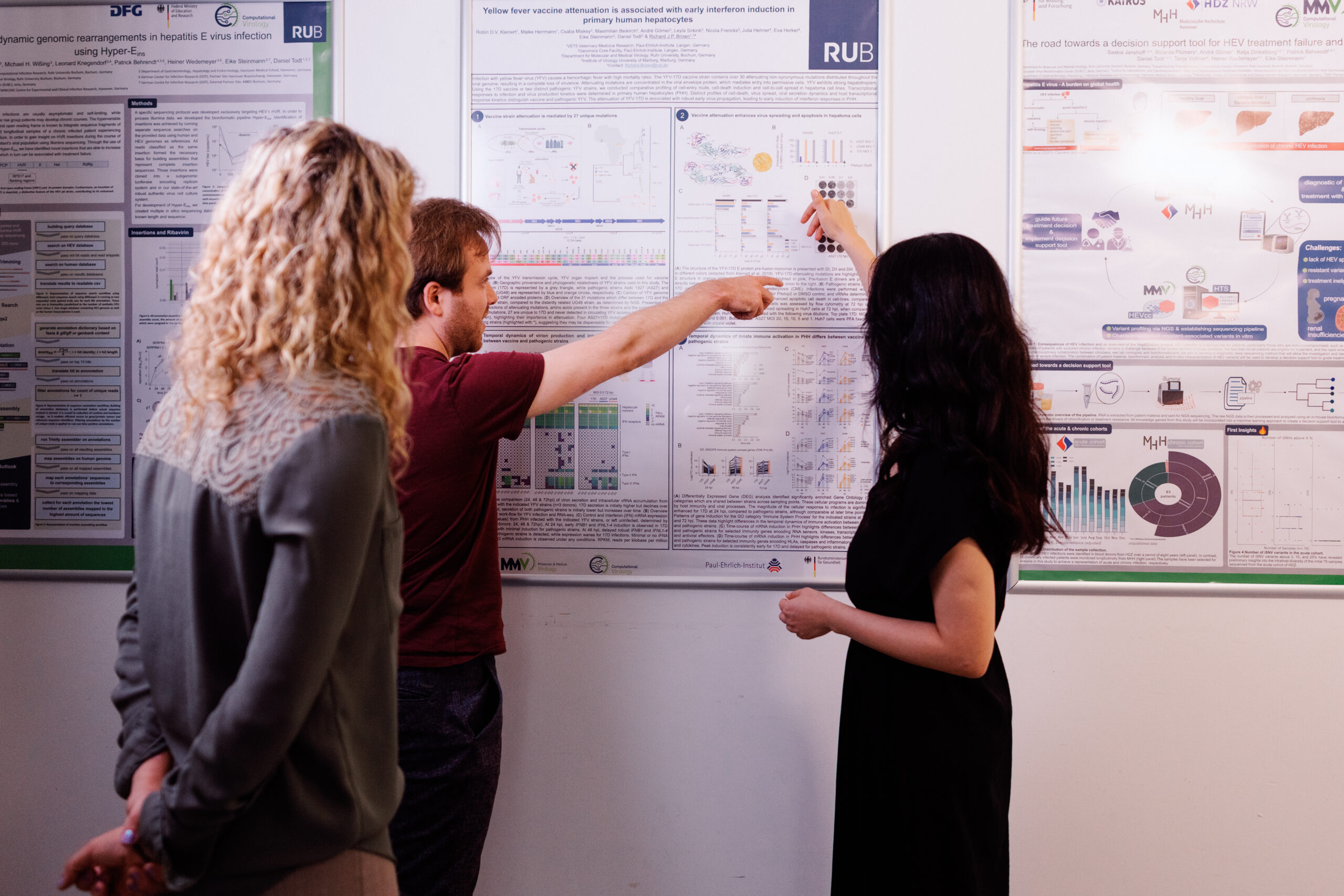
To be announced.
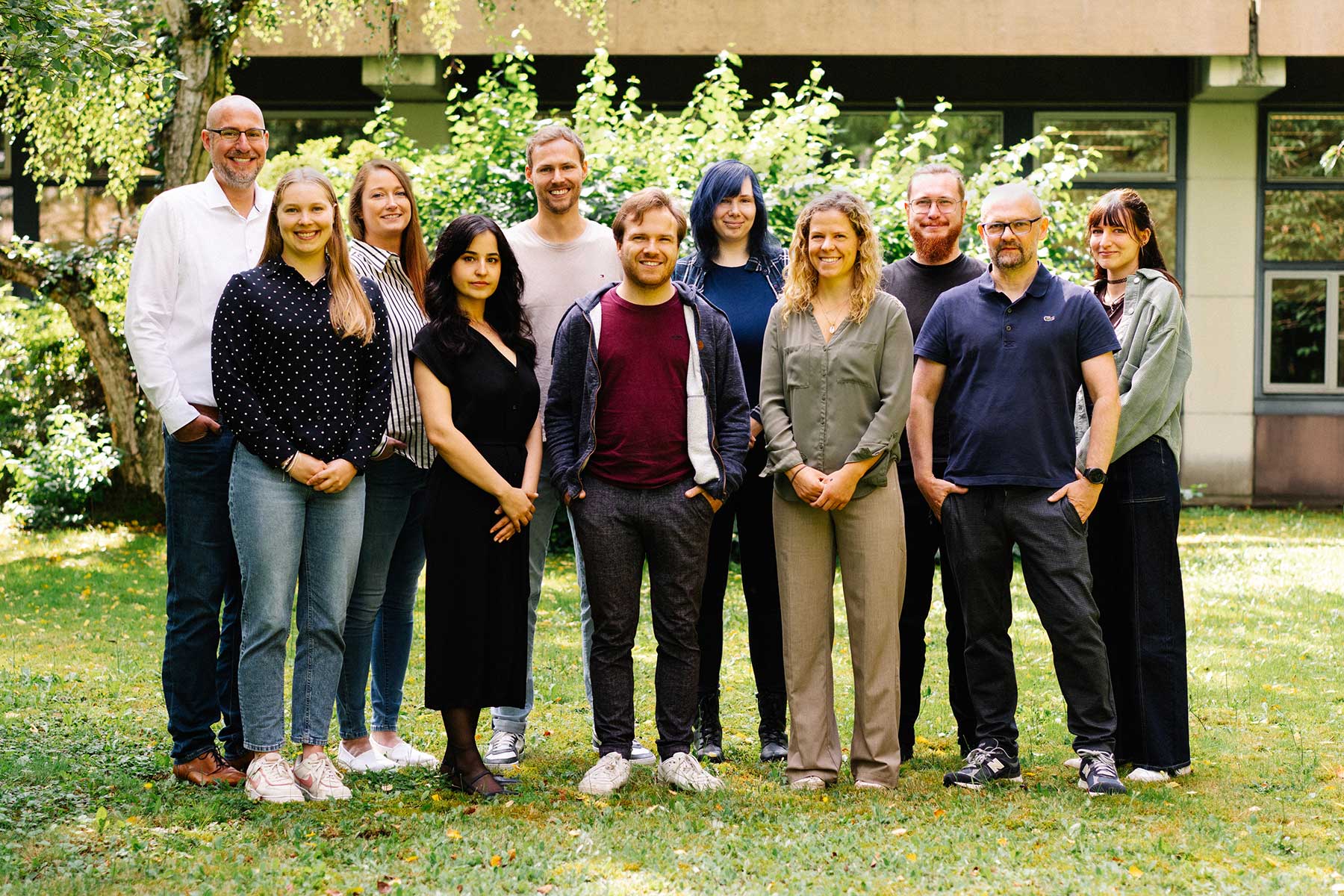

Univ.-Prof. Dr. Daniel Todt
Head of Department
Tel. +49 234 32 18470
Univ.-Prof. Dr. Daniel Todt is Professor of Computational Infection Research and heads the TRACiR department. His research focuses on viral genomic plasticity and innovative sequencing and analysis approaches to study persistent infections.

Ramona Uehara
Team Assistant
Tel. +49 234 32 28084
ramona.uehara@ruhr-uni-bochum.de
Ramona Uehara is Team Assistant at TRACiR, ensuring smooth day-to-day operations with organizational efficiency and keen attention to detail. She serves as a key point of contact for internal
coordination and administrative tasks.
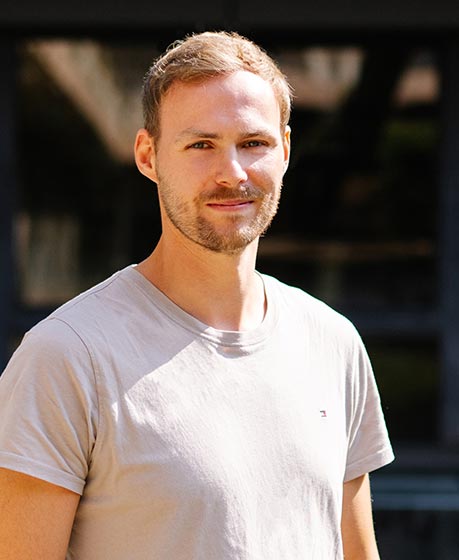
Dr. Tom Luthe
Science Manager
Tel. +49 234 32 18564
Dr. Tom Luthe is Science Manager at TRACiR, coordinating strategic development, research funding, and scientific communication. With a background in the life sciences, he combines research expertise with organizational foresight.

Dr. Richard J.P. Brown
Group Leader
Tel. +49 234 32 15567
richard.brown@ruhr-uni-bochum.de
Dr. Richard J.P. Brown is a postdoctoral researcher with
outstanding expertise in molecular virology, viral immune regulation, and evolution. At TRACiR, he combines deep mechanistic insight with analytical precision to explore viral adaptation strategies.
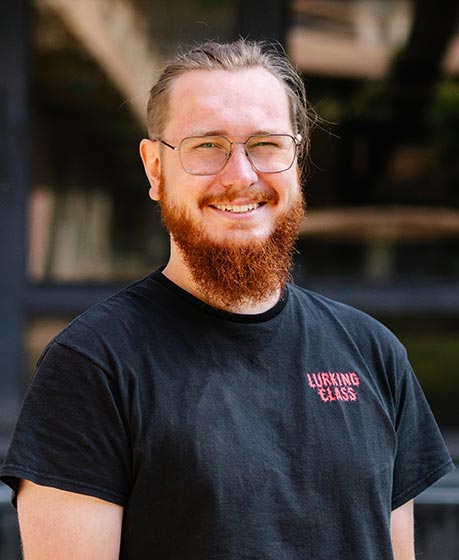
Dr. Maximilian K. Nocke
Post Doc
Tel. +49 234 32 29277
maximilian.nocke@ruhr-uni-bochu…
Dr. Maximilian K. Nocke is a postdoctoral researcher and expert in bioinformatics and scientific programming. At TRACiR, he designs custom analysis tools to advance virological research.

Dr. Nadi Dixit
Post Doc
Tel. +49 234 32 18354
Dr. Nadi Dixit is a postdoctoral researcher and has a diverse background in biological research. She brings expertise in bioinformatics and evolution. At TRACiR, she is responsible for establishing and developing the spatial transcriptomics platform.
Hannah Sturm
Data Scientist
Tel. +49 234 32 18748
hannah.sturm@ruhr-uni-bochum.de
As Data Scientist at TRACiR, Hannah Sturm is responsible for data evaluation, management, and visualization. In addition to bioinformatic analysis, network administration and server maintenance are essential parts of her responsibilities.

Leyla Sirkinti
PhD Student
leyla.sirkinti@ruhr-uni-bochum.de
Leyla Sirkinti is a PhD student at TRACiR focusing on virus–host interactions. Her research investigates the molecular strategies viruses use to manipulate cellular pathways and modulate immune responses.

Saskia Janshoff
PhD Student
Tel. +49 234 32 29277
saskia.janshoff@ruhr-uni-bochum.de
Saskia Janshoff is a PhD student at TRACiR with a deep fascination for virus evolution. Her research focuses on intra-host evolution, adaptation and diversification under selective pressure within the host.
Veronika Wilczek
PhD Student
Tel. +49 234 32 23183
veronika.wilczek@ruhr-uni-bochum.de
Veronika Wilczek is a PhD student at TRACiR. She combines experimental methods in the laboratory and computational analyses with great curiosity in order to interpret the data obtained and gain new insights on viral infections.

Theresa Bechtel
PhD Student
Tel. +49 234 32 18898
theresa.bechtel@ruhr-uni-bochum.de
Theresa Bechtel is a PhD student at TRACIR, exploring both wet-lab techniques and bioinformatics. She is expanding her skills at the interface of experimental virology and computational analysis.

Sarah Herhaus
MD Student
sarah.herhaus@ruhr-uni-bochum.de
Sarah Herhaus is a medical Student working on her M.D. at TRACiR.
Maximilian Beikirch
MD Student
maximilian.beikirch@ruhr-uni-bochum.de
Maximilian Beikirch is a medical Student working on his M.D. at TRACiR.
Muhamed Adib Weis
MSc Student
muhamed.weis@ruhr-uni-bochum.de
Muhamed Adib Weis is a MSc student at TRACiR. At the interface between bioinformatics and molecular virology, his work focuses on the computational analysis of virus-host interactions to better understand infection mechanisms.

Salsabil Nouasria
MSc Student
salsabil.nouasria@ruhr-uni-bochum.de
Salsabil Nouasria is a MSc student at TRACiR interested in bioinformatics as well as wet-lab methods. Her work focuses on combining experimental approaches and data analysis.


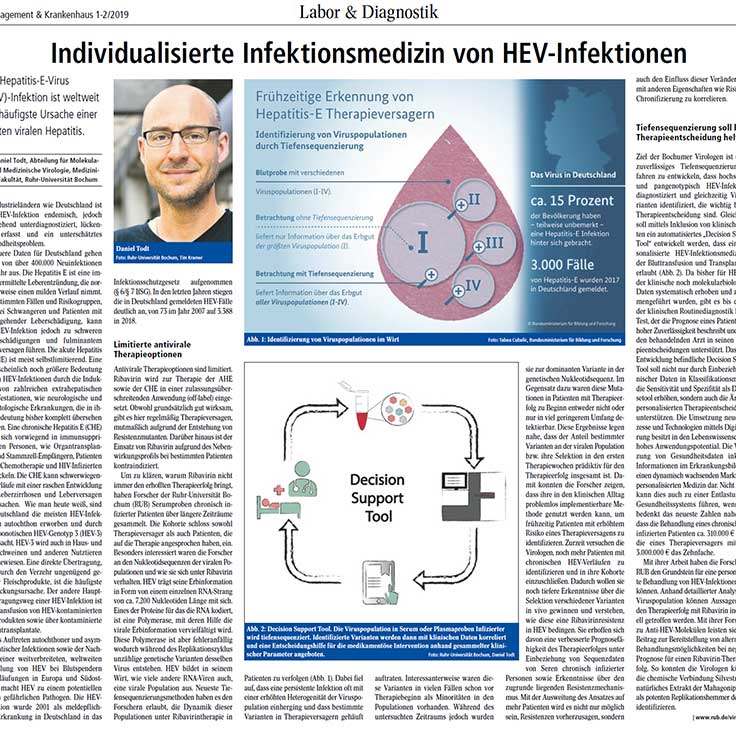
Dr. Daniel Todt: Individualisierte Infektionsmedizin von HEV-Infektionen (Management & Krankenhaus 1-2/2019) (PDF)

Deuse, Klaus: Bargeld und Corona (MDR Aktuell)
wiley.com – Personalized Infection Medicine Taking the Example of Hepatitis E Virus Infection
CT das Radio – HCV und Pferde-Virus
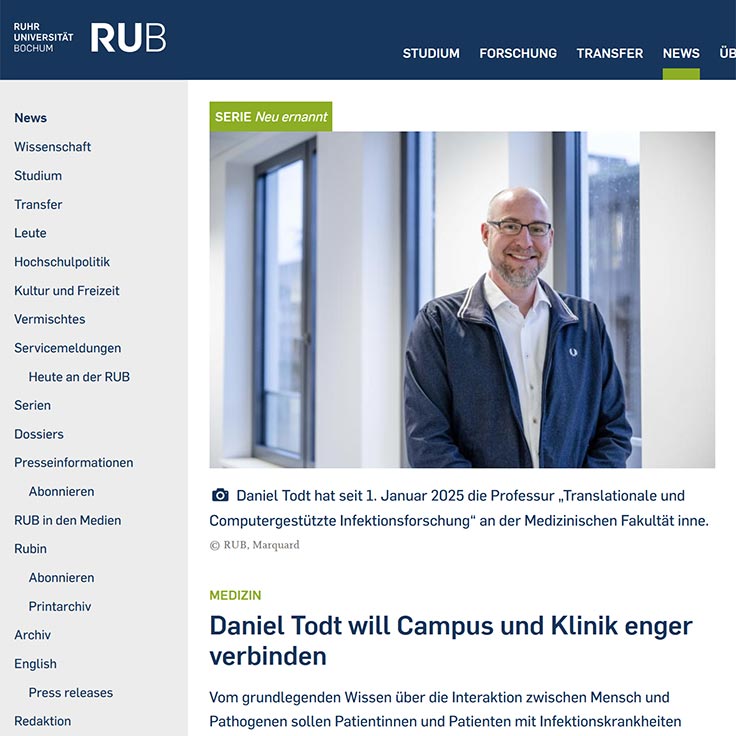
news.rub.de – Daniel Todt will Campus und Klinik enger verbinden
VETJOURNAL 06/2022 – Pferde-Hepatitisviren helfen, Hepatitis C zu verstehen (PDF)
Gömer, André, Richard J. P. Brown, Stephanie Pfänder, Katja Deterding, Gábor Reuter, Richard Orton, Stefan Seitz, et al. 2022.
“Intra-Host Analysis of Hepaciviral Glycoprotein Evolution Reveals Signatures Associated with Viral Persistence and Clearance.”
Virus Evolution [ISSN: 2057-1577], January.
https://doi.org/10.1093/ve/veac007.
Gömer, André, Mara Klöhn, Michelle Jagst, Maximilian K. Nocke, Sven Pischke, Thomas Horvatits, Julian Schulze zur Wiesch, et al. 2023.
“Emergence of Resistance-Associated Variants during Sofosbuvir Treatment in Chronically Infected Hepatitis E Patients.”
Hepatology, June.
https://doi.org/10.1097/hep.0000000000000514.
Todt, Daniel, Martina Friesland, Nora Moeller, Dimas Praditya, Volker Kinast, Yannick Brüggemann, Leonard Knegendorf, et al. 2020. “Robust Hepatitis E Virus Infection and Transcriptional Response in Human Hepatocytes.” Proceedings of the National Academy of Sciences of the United States of America 117: 1–41.
https://doi.org/10.1073/pnas.1912307117.
Todt, Daniel, Anett Gisa, Aleksandar Radonic, Andreas Nitsche, Patrick Behrendt, Pothakamuri Venkata Suneetha, Sven Pischke, et al. 2016.
“In Vivo Evidence for Ribavirin-Induced Mutagenesis of the Hepatitis E Virus Genome.”
Gut 65 (10): 1733–43.
https://doi.org/10.1136/gutjnl-2015-311000.
Wißing, Michael, Toni Luise Meister, Maximilian K. Nocke, André Gömer, Mejrema Masovic, Leonard Knegendorf, Yannick Brüggemann, et al. 2024.
“Genetic Determinants of Host- and Virus-Derived Insertions for Hepatitis E Virus Replication.”
Nature Communications 15 (1).
https://doi.org/10.1038/s41467-024-49219-8.